Industry Focus

Generic drafting firms see lines on a page; we see motor control centers, safety relays, and high-frequency power systems. Because our documentation teams are led by experienced field engineers and maintenance professionals, we understand the unique operational hazards, compliance requirements, and mechanical realities of your specific industry. We deliver digital schematics engineered for the people who actually turn the wrenches.
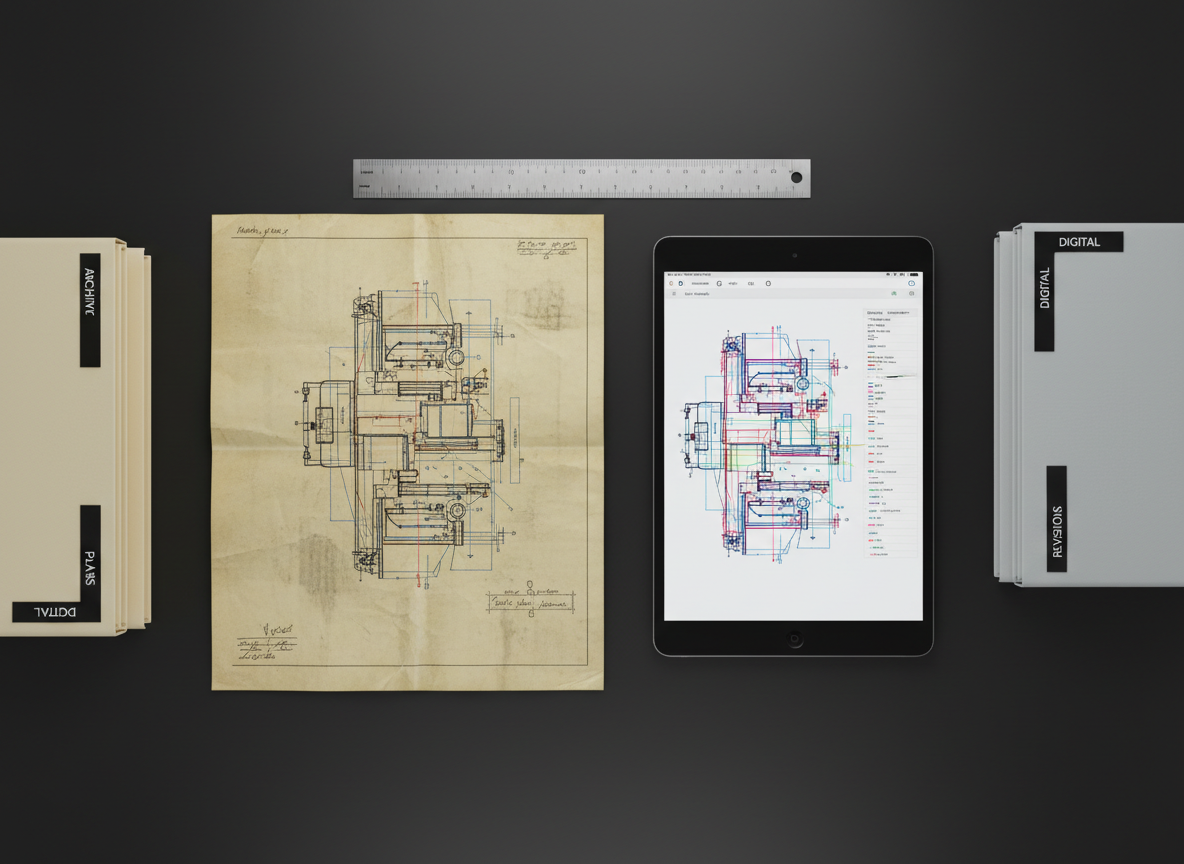
An organized pairing of a worn, folded paper industrial schematic beside its freshly digitized counterpart on a slim tablet, both resting on a matte black workbench in a technical documentation lab. The paper drawing shows creases, smudged pencil notes, and faded ink lines, while the tablet displays the same layout with crisp vector lines, clear color coding, and tidy annotation layers. A steel ruler and labeled folders are neatly arranged around them. Neutral, diffused studio lighting from above minimizes harsh shadows, creating even illumination across both versions. Photographed from a top-down bird’s-eye view with perfect sharpness from edge to edge, the mood is methodical and efficient, emphasizing transformation from analog to digital within a clean, professional, photographic realism style.
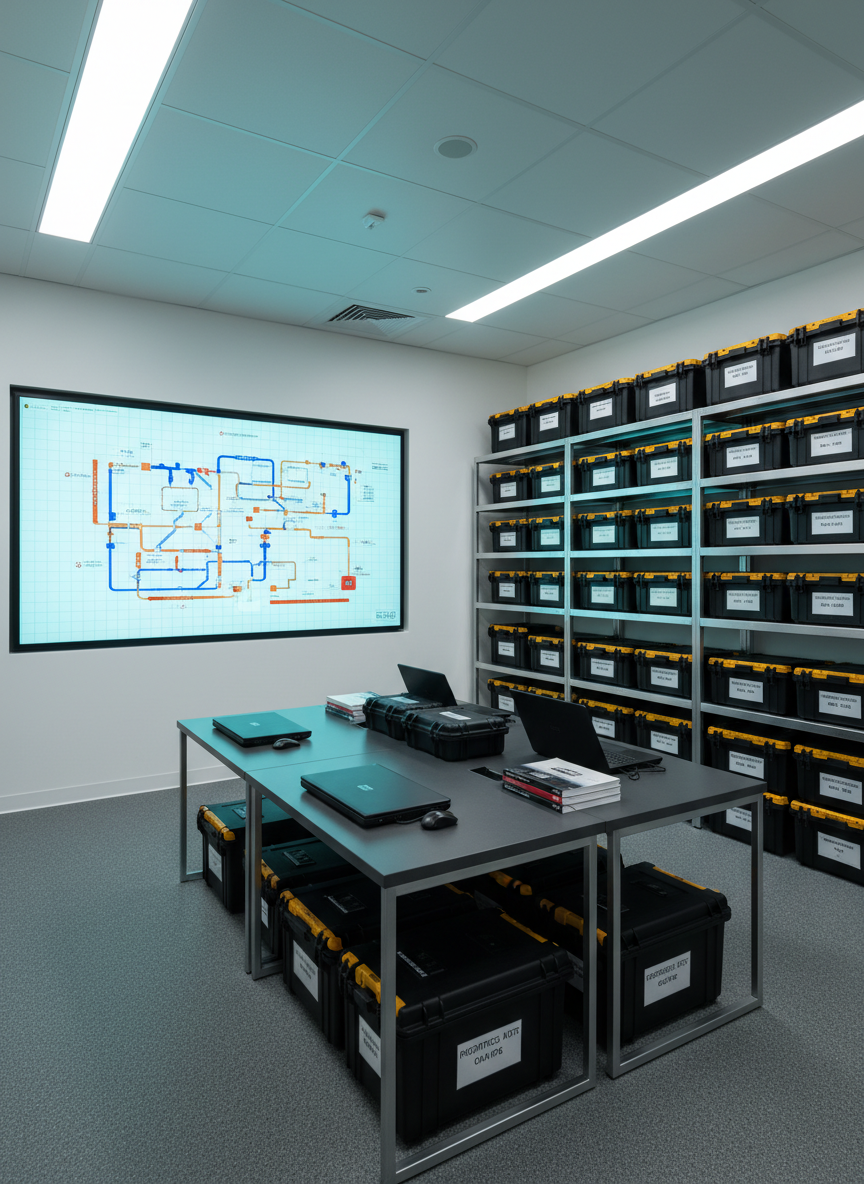
A detailed industrial floor plan schematic displayed on a large, wall-mounted screen in a compact field support planning room, surrounded by orderly shelves of labeled equipment cases and rugged laptops closed on a central table. The schematic shows production lines, conveyors, and safety zones in precise color-coded layers over a light gray grid. Cool white LED ceiling panels provide uniform, shadow-free illumination, while the screen’s glow adds a faint cyan tint to nearby surfaces. Captured from a slightly wide, eye-level perspective using the rule of thirds to feature the screen prominently, the image maintains sharp focus across the room. The atmosphere is calm, prepared, and highly organized, conveying a professional, photographic realism aesthetic tailored to on-site technical coordination.

Digitizing Industrial Schematics, Reliably

We partner with manufacturing, energy, and processing facilities to convert legacy prints into precise digital schematics, support field verification, and standardize documentation, cutting troubleshooting time and risk. Explore sector-specific workflows on our services page for implementation details.

The Challenge: Constant retrofits, line changeovers, and continuous improvement projects mean that electrical schematics and I/O mappings are almost never up to date. When an automated cell goes down, maintenance spends more time chasing wires than fixing the problem. Our Solution: We untangle the web of undocumented PLC upgrades and robotic integration. We verify sensor tags, update panel schedules, and deliver clean, searchable digital twins so your team can troubleshoot complex automated systems in minutes, not hours.

The Challenge: Heavy industrial facilities often rely on legacy machinery that has been running for decades on fading, coffee-stained paper schematics or worse, the tribal knowledge of a few senior technicians. Our Solution: We specialize in high-voltage power routing, high frequency systems, and heavy mechanical documentation. We physically walk the floor to verify as-builts, ensuring your documentation reflects every splice, bypass, and modification made over the last 20 years.

The Challenge: In process environments, inaccurate documentation isn’t just an inconvenience; it is a critical safety and compliance hazard. Outdated P&IDs (Piping and Instrumentation Diagrams) lead to dangerous lockout/tagout (LOTO) errors. Our Solution: We digitize and normalize your legacy P&IDs and loop sheets. Our onsite validation ensures that every valve, pump, and transmitter matches the physical plant, keeping your facility compliant with strict regulatory standards and keeping your operators safe.

Reviews
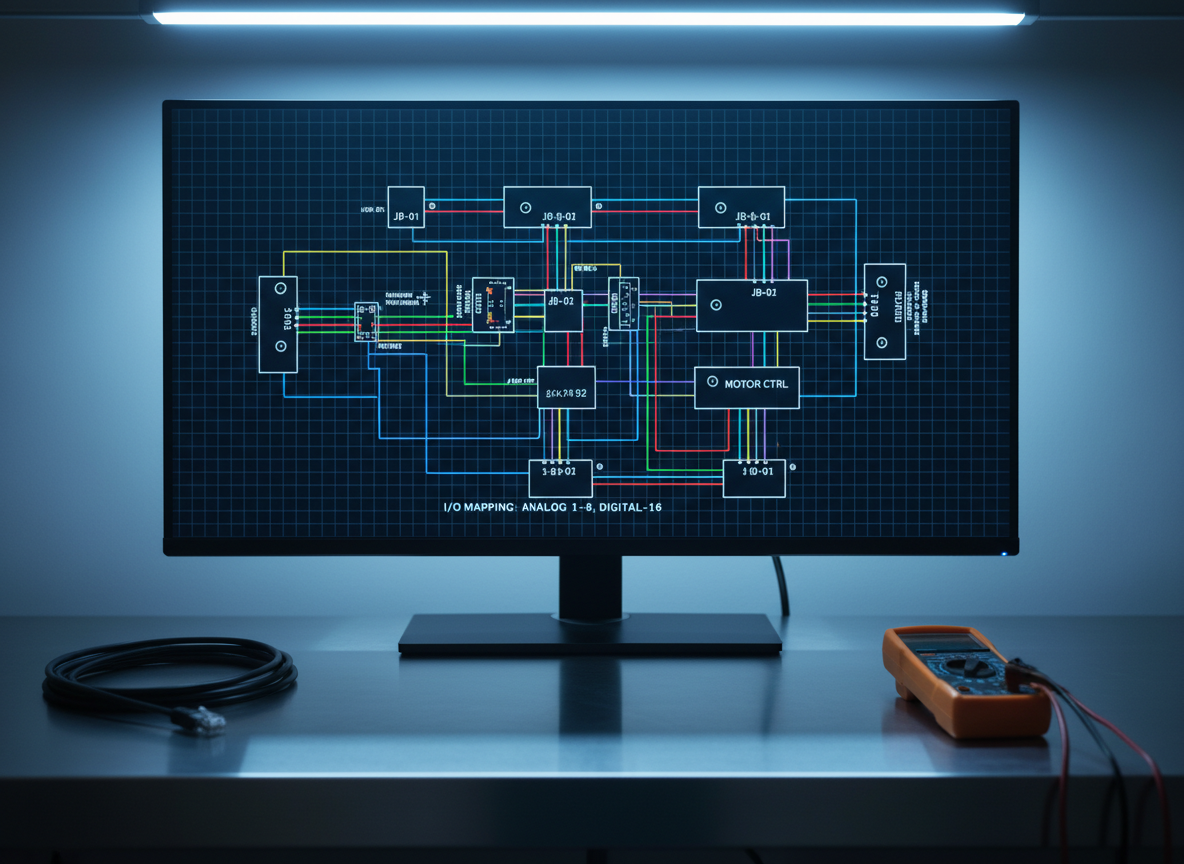
A high-resolution close-up of a rugged industrial control panel schematic displayed on a large 4K monitor in a minimalist, technology-focused workspace. The screen shows color-coded lines, labeled junction boxes, and detailed I/O mappings over a dark grid background, with crisp, luminous graphics. A sturdy, brushed aluminum desk supports the monitor, with a neatly coiled Ethernet cable and a precision multimeter resting nearby. Soft overhead LED lighting combines with faint ambient blue light from the monitor, casting cool highlights on the metal surfaces and creating a calm, focused atmosphere. Captured straight-on at eye level with shallow depth of field that keeps the schematic in razor-sharp focus while gently blurring the peripherals, the image embodies photographic realism, clarity, and methodical precision.

Aya Nakamura

With their digitized schematics, our electricians isolate faults in minutes instead of hours, slashing unplanned downtime and overtime costs across the packaging line.

An organized pairing of a worn, folded paper industrial schematic beside its freshly digitized counterpart on a slim tablet, both resting on a matte black workbench in a technical documentation lab. The paper drawing shows creases, smudged pencil notes, and faded ink lines, while the tablet displays the same layout with crisp vector lines, clear color coding, and tidy annotation layers. A steel ruler and labeled folders are neatly arranged around them. Neutral, diffused studio lighting from above minimizes harsh shadows, creating even illumination across both versions. Photographed from a top-down bird’s-eye view with perfect sharpness from edge to edge, the mood is methodical and efficient, emphasizing transformation from analog to digital within a clean, professional, photographic realism style.

Mateo García

Field-verified drawings from Uptime finally match what’s in our panels, giving technicians confidence and dramatically improving lockout-tagout compliance during maintenance.